AC Installation & Replacement by Trusted Local Pros
Tell us about your home and we'll match you with an independent licensed local contractor — they'll call to schedule a free assessment and quote. Central air, heat pumps, mini-splits. Takes 60 seconds.
- Licensed, EPA 608 certified contractors only
- Central AC, heat pumps & ductless mini-splits
- Quotes can identify current state & utility incentives
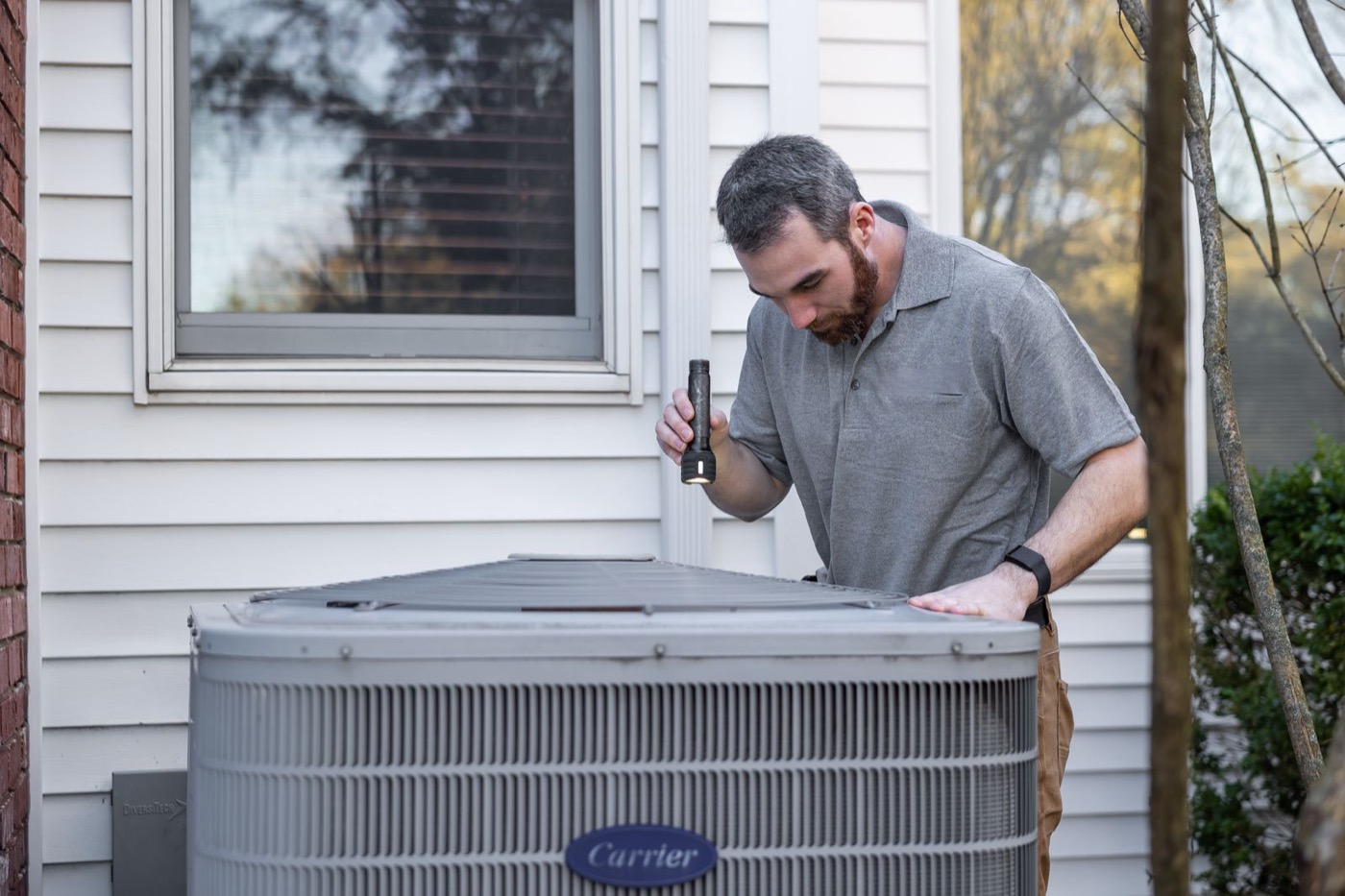
What local contractors install
Central AC replacement
Like-for-like condenser and coil swaps through to full system upgrades — sized with a proper Manual J calculation.
Ductless mini-splits
Room-by-room comfort for additions, garages and homes without ductwork. Compare installed prices by zone.
Commercial HVAC
Rooftop package units, split and VRF systems for storefronts, restaurants and offices — scoped through commissioning.
Heat pump systems
Cools like an AC in summer and heats efficiently in winter — compare 2026 installation costs and local incentives.
How it works
Tell us about your property
60 seconds: property type, size, rooms to cool and your zip code. That's everything HVAC contractors need to quote accurately.
We match you with your local specialist
We pass your enquiry to one independent local specialist — EPA 608 certified technicians, covering your area, experienced with your property type.
They call, survey & quote
The installer calls to arrange a free survey, then quotes the job properly. Go ahead if it feels right — or walk away. No cost, no obligation, and any contract is directly between you and them.
The standard every HVAC contractor must meet
We'd rather match fewer jobs than pass your details to just anyone. Every independent HVAC contractor must meet these requirements to join the network:
- EPA 608 certified technicians. Federally required for refrigerant work — certification is a condition of joining the network.
- State licensing & insurance. Contractors must hold the licence and liability cover their state requires.
- Permits pulled properly. Installers who handle mechanical permits as standard — no code shortcuts.
- Surveyed quotes only. Every price follows a home assessment with a load calculation — not a phone estimate.
Free planning tools
Plan the job before you call
Use practical estimates to prepare for a licensed contractor assessment.
Get your free installation quote
Tell us about your property once. We match you with an independent local specialist — EPA 608 certified technicians — who calls you to arrange a free survey and a properly priced quote. It costs nothing either way.
- One specialist, not a list. Your details go to a single independent installer who can actually do your job — never sold around.
- Clear scope, not phone guesses. The specialist confirms the property, equipment and work before pricing it.
- Zero obligation. If the quote doesn't feel right, walk away — you owe nothing.
Get Your Free Installation Quote
We'll check for a trusted local HVAC contractor covering your area. Availability varies, and we will confirm whether an immediate match is possible. No obligation.
Request received
We’ll confirm whether a suitable local HVAC contractor has availability. Current demand means an immediate match is not always possible.
AC installation and replacement costs
AC installation costs vary widely by market, home size and equipment tier. As a national guide, a 3-ton central AC replacement runs $5,500–$13,000 installed, with hot-climate metros like Phoenix and Las Vegas at the upper end. Ductless mini-splits cost $3,500–$6,000 for one zone and dominate no-duct retrofits in California and older housing everywhere.
Heat pump installation typically costs $7,000–$16,000 with usable ducts, providing cooling and efficient winter heat. If distribution is failing, budget the ductwork scope separately. The federal 25C home-improvement credit ended for equipment placed in service after December 31, 2025, but some state, local and utility programs remain available. Compare any HVAC financing against the cash price before signing.
| System type | Best for | Typical installed cost |
|---|---|---|
| Central AC replacement (3–4 ton) | Homes with existing ductwork | $5,500 – $13,000 |
| Heat pump system | Year-round heating + cooling; local incentives vary | $7,000 – $16,000 |
| Ductless mini-split (one zone) | No-duct homes, additions, ADUs, garages | $3,500 – $6,000 |
| Full system + ductwork | Older homes, major renovations | $10,000 – $20,000 |
Getting AC replacement right
Most American AC systems get replaced in a panic — mid-heatwave, compressor dead, first available contractor. That's the most expensive possible way to buy a system you'll live with for 15 years. Comparing multiple quotes before failure puts you in control of equipment choice, efficiency tier and price.
The details that matter: a proper Manual J load calculation (not a rule-of-thumb tonnage match), duct inspection on any system older than 15 years, the correct SEER2 tier for your climate's cooling season, and a written check of current state, local and utility incentives for your address.
Businesses should start with our commercial HVAC installation guide. If a home system fails during dangerous heat, use the emergency AC safety and cost checklist before approving an after-hours repair.
Local installation guidance
HVAC costs in your market
Compare local pricing, climate demands, permits and contractor availability in major US metros.
AC installation FAQs
How much does AC installation cost?
A central AC replacement (3–4 ton) typically costs $5,500–$13,000 installed, depending on your market, equipment tier and whether ductwork needs attention. Ductless mini-splits run $3,500–$6,000 per zone. Full system-plus-ductwork jobs range $10,000–$20,000. Your YourAirCon-matched contractor surveys before pricing, so the number is real.
Should I choose a heat pump or a straight AC?
In most of the South and on the coasts, a heat pump can be the smarter buy: it cools identically to an AC in summer and heats efficiently in winter, replacing or reducing furnace use. Compare the full installed price, local utility incentives and winter operating cost. In cold-winter markets, dual-fuel or cold-climate heat pumps are the options to compare.
What SEER2 rating should I buy?
Federal minimums are SEER2 13.4 (North) and 14.3 (South). In long cooling seasons — Texas, Arizona, Florida, the Gulf — stepping up to 16–18 SEER2 usually pays back through lower bills. In short cooling seasons, minimum-efficiency equipment often makes better financial sense. Compare payback in your quotes, not just sticker price.
Do I need a permit to replace my AC?
Almost everywhere, yes — AC replacement requires a mechanical permit, and your contractor should pull it as part of the job. Permits ensure code compliance (hurricane strapping in Florida, flood elevation, electrical safety) and matter when you sell the house. Be wary of any bid that skips permitting.
How long does AC installation take?
A straight condenser-and-coil replacement is typically done in one day. A full system with air handler takes one to two days, and jobs with ductwork replacement run two to four days. In peak summer, contractor scheduling — not the work itself — is usually the bottleneck.
When is the best time to replace an AC unit?
Fall through early spring. Off-season replacements get better scheduling, more negotiating room and seasonal promotions. If your system is 12–15+ years old and struggled last summer, replacing it before the heat arrives beats joining the emergency queue in July.
Beat the heat — and the emergency queue
Your trusted local contractor is one 60-second form away. Free assessment, no obligation.
Get My Free Quote →